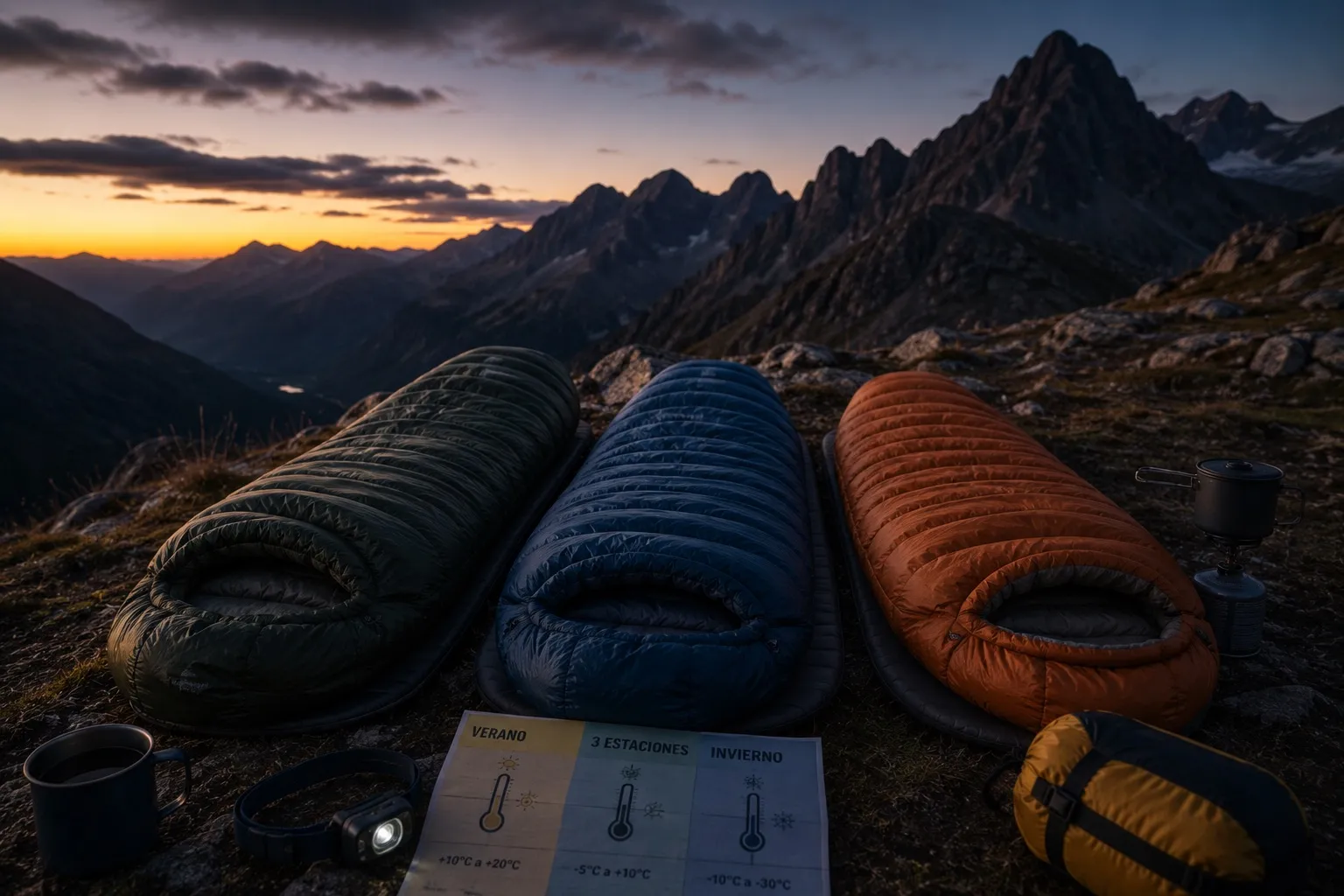
The sleeping bag is the piece of kit that decides whether you sleep or shiver. On a well-planned night of bivouacking, everything else can fail gracefully except this: a bag that’s too cold ruins your entire night. Here’s what really matters when choosing one.
Temperature: read the label properly
Serious bags carry the EN/ISO 23537 standard with three figures:
- Comfort: the temperature at which someone who feels the cold sleeps well. This is the one to look at.
- Limit: a standard person gets by without feeling cold, but it’s no longer comfortable.
- Extreme: survival, not rest. Ignore it for planning.
Rule of thumb: pick the comfort temperature and subtract a margin for altitude and bad nights. In the mountains, at night, the thermometer drops far lower than the valley forecast suggests.
Down or synthetic
The two big families, each with its own logic:
- Down: best warmth-to-weight ratio, compresses hugely and lasts for years. But it loses insulating power when wet and costs more. Ideal for mountain bivouacking where weight is king.
- Synthetic: insulates even when wet, dries fast and is cheaper. It weighs and packs more. A good option for getting started, damp environments or if you don’t want to fuss over maintenance.
For light, dry bivouacking, down pays off. If you’re starting out or heading to damp places, a good synthetic gets you out of plenty of trouble.
Weight, volume and shape
When bivouacking you carry everything on your back, so weight and packed volume matter as much as warmth:
- Mummy shape: warmer and lighter because it hugs the body. The standard for the mountains.
- A hood and a draught-blocking zip baffle: details that prevent heat leaks.
- Pair it with a good mat: the bag insulates from above, the mat from below. Without an insulating mat, the ground steals your heat no matter how good your bag is.
Don’t forget the rest of the system
A bag doesn’t work alone. The clothes you sleep in are part of the insulation: a dry base layer and a thin beanie make all the difference. If you master the three-layer system you’ll know exactly what to wear inside the bag without overdoing it.
And if your plan includes walking before dawn, make sure you also pack a good headlamp.
A summary to help you decide
- Look at the comfort temperature, not the extreme one, and leave a margin.
- Down if you prioritise weight and stay dry; synthetic for getting started or damp environments.
- Mummy shape + a mat with a good R-value.
Get those three decisions right and the sleeping bag stops being a worry and becomes what it should be: the comfortable part of bivouacking.