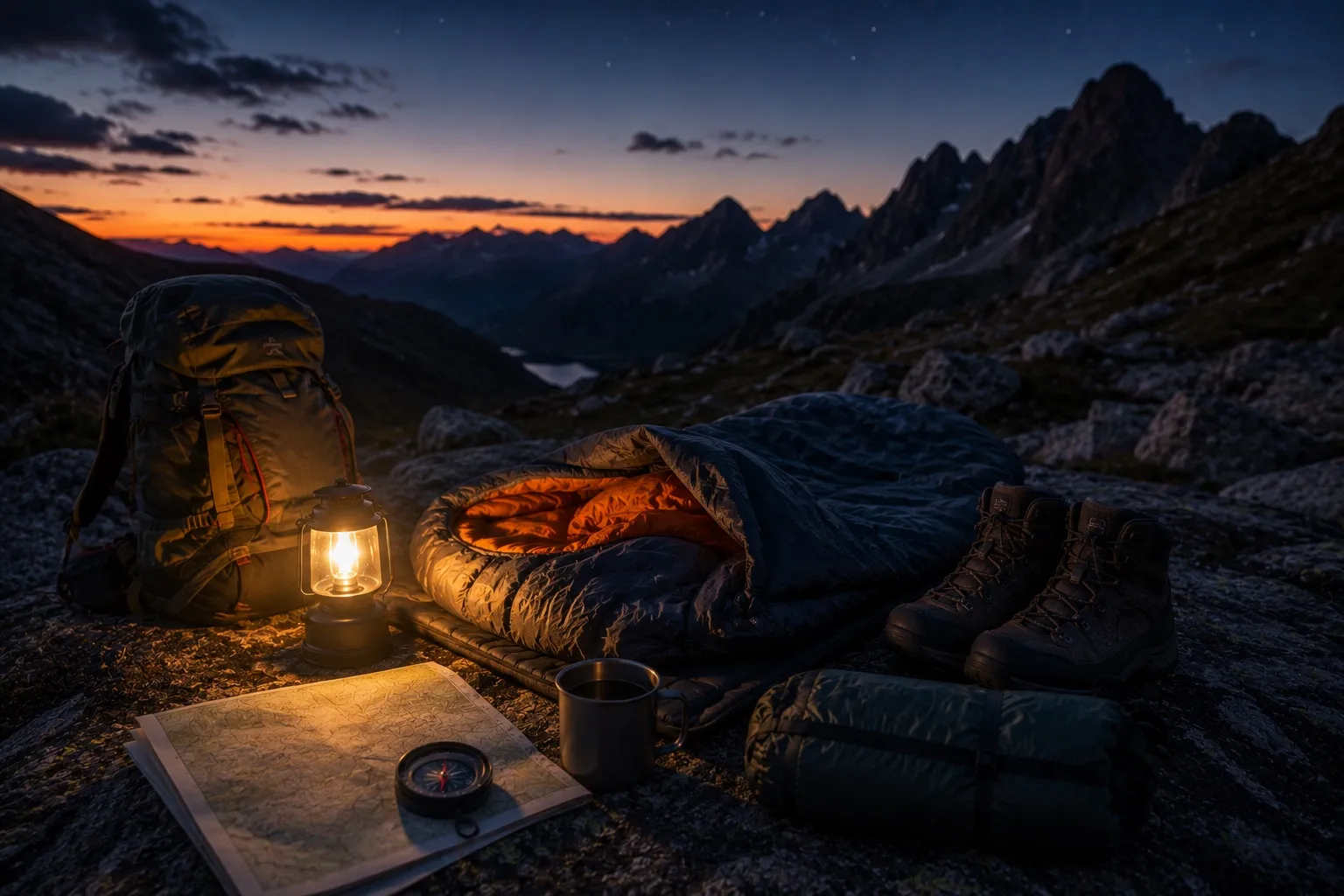
Sleeping in the mountains, far from any hut and under the stars, is one of the most addictive experiences out there. But the first bivouac is a little daunting: is it legal? What do I bring? What if I’m cold all night? This guide covers the essentials so your first night out goes well and you’ll want to do it again.
Bivouacking isn’t wild camping
It’s worth being clear on the difference, because the law treats them differently. Camping means pitching a tent and staying put; bivouacking means spending the night travelling light (sleeping bag, mat and at most a minimal shelter), arriving at dusk and packing up at dawn, leaving no trace.
In Spain the rules depend on each autonomous community and on the protection status of the land. As a general rule:
- In most national and natural parks, bivouacking is regulated and is often only allowed above a certain altitude and between dusk and dawn.
- On unprotected land there’s usually more leeway, but never on private property without permission, nor in water catchment areas.
- When in doubt, check the protected area’s website before you go. A fine ruins the experience.
The minimum gear
You don’t need a huge kit, but you do need the right one. The three items that make the difference between a restful night and one spent wide awake are:
- A sleeping bag with the right comfort temperature for the season and altitude. It’s the most important decision; we devote a whole guide to it in how to choose a sleeping bag for bivouacking.
- An insulating mat: it shields you from the cold of the ground, which steals more heat than you’d think. Check the R-value.
- Layered clothing: the temperature drops a lot at night. Master the three-layer system and you’ll carry exactly what you need without overpacking.
Add to that a reliable headlamp — essential for moving around at night — water, food and a small first-aid kit. If you’re going to walk in the dark, read up on the best headlamp for night hiking.
Choosing your spot
Where you sleep shapes the whole night. Look for:
- Flat ground sheltered from the wind, away from watercourses, avalanche chutes and rockfall.
- Near water if possible, but not right next to it (damp and bugs).
- Arrive with enough daylight to set up calmly and get to know your surroundings.
Avoid exposed summits the first time: the view is spectacular, but the wind and cold are brutal.
Leave no trace
Responsible bivouacking is what keeps these places open to everyone. Take all your rubbish with you, don’t light fires, relieve yourself well away from water and bury anything organic. Leave the spot better than you found it.
Common first-bivouac mistakes
- Underestimating the night-time cold: even on a warm day, the temperature plummets in the small hours.
- Not breaking in your gear: test the bag and mat at home first.
- Walking at night without a good headlamp: a lot of scares come from this. We cover it in common night hiking mistakes.
With the spot well chosen, just the right gear and respect for the environment, your first bivouac will be the first of many.